Instrument Spotlight: Exploring the World of the Drums
There is something primal about the drums. Before humans mastered melody or harmony, we had the beat. Whether it’s the steady thump of a heart or the rhythmic clap of hands, percussion is the foundation of music.
In this spotlight, we’re diving into the "engine room" of the band to explore why the drums are much more than just noise—they are the soul of the song.
The Anatomy of a Modern Drum Kit
While percussion instruments vary wildly across cultures, the standard "Drum Kit" (or trap set) is a marvel of engineering designed to let one person play several instruments at once.
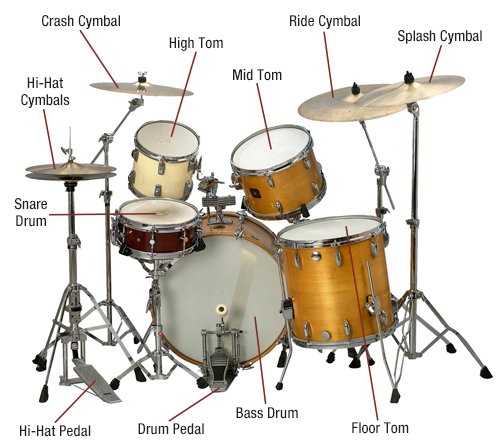
The Bass Drum: Deep, thumping, powerful. The heartbeat; provides the rhythmic foundation.
Snare Drum: Sharp, "crackling," brightThe "backbeat"; usually played on beats 2 and 4.
Hi-Hats: Crisp, metallic, controlled. The timekeeper; helps maintain the subdivision of the beat.
Tom-Toms: Hollow, resonant, melodic. Used for "fills" and transitions between song sections.
Cymbals: Shimmering, sustaining, loud. Adds "color" and emphasis to big moments (crashes and rides).
Why the Drums Matter
Many people view the drummer as the person who just sits in the back and hits things, but the drummer actually holds the most responsibility in a group.
The Internal Clock: A band can survive a missed guitar note, but if the drummer loses the tempo, the entire song collapses.
Dynamic Control: The drummer dictates how loud or soft a song feels. By switching from a light touch on the hi-hat to a heavy crash on the cymbals, they control the emotional energy of the room.
Physicality and Coordination: Playing the drums is a full-body workout. It requires four-way independence, meaning your brain is essentially telling your left hand, right hand, left foot, and right foot to do four different things simultaneously.
"Technique is important, but it’s the soul that makes the rhythm swing."
A World of Percussion
The modern kit is just the tip of the iceberg. Every corner of the globe has its own rhythmic language:
The Djembe (West Africa): A rope-tuned skin-covered drum played with bare hands, known for its wide range of tones.
The Tabla (India): A pair of hand drums used in Hindustani classical music, capable of incredibly complex, speech-like rhythms.
The Cajón (Peru): Essentially a wooden box you sit on; it has become a staple for acoustic "unplugged" sessions.
Getting Started: Can Anyone Play?
The short answer? Yes. While mastering the drums takes a lifetime, the barrier to entry is lower than you think. You don't even need a full kit to start—a pair of sticks and a practice pad (or a sturdy pillow) are enough to begin learning basic rudiments.
The drums are about more than just hitting things; they are about listening. To be a great drummer is to be a great listener, feeling the space between the notes and knowing exactly when to fill it.
Ready to find your rhythm?
We have four amazing drum teachers at La Jolla Music who each bring their own flare to the instrument and ALL of them offer a first lesson free. Click here to check them out and schedule your free lesson today!